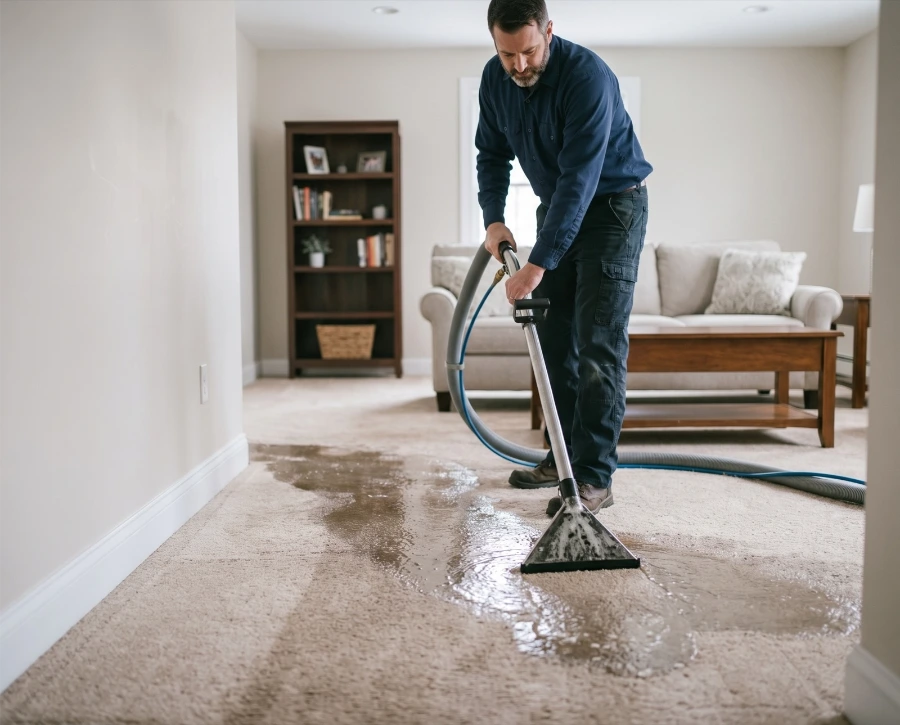
Water extraction is the removal of standing and absorbed water from floors, carpet, pad and basements using pumps and extraction equipment. In Fairfax it is usually the first hands-on step of water damage restoration: the more water extracted, the faster drying goes and the less material has to be removed.
- Extraction comes before drying equipment
- Water removal and water extraction describe the same first step
- Clean-water carpet can often be saved; pad is often replaced
- Readings taken after extraction guide the drying plan
Last reviewed · Reviewed against the sources listed on this page
Water extraction is the first hands-on step of most water damage restoration jobs in Fairfax. Every gallon physically removed is a gallon the drying equipment does not have to evaporate later, which is why extraction is usually done before any fans or dehumidifiers are set.
Extraction is not just about what you can see on the floor. Carpet, pad, rugs and some flooring hold a significant amount of water that a shop vacuum or towels will not reach. Our team assesses what the water touched, removes what can be removed, and then measures what is left behind.
01
When you need professional water removal
Can I just use a shop vac? A small spill on tile that you can wipe up in minutes usually does not need a restoration company. Professional extraction makes sense when water has spread across carpet, run under baseboards or cabinets, collected in a basement, or come from a source you could not stop right away.
- More than a small area of saturated carpet or pad
- Water that reached drywall, baseboards or lower cabinets
- Any standing water in a finished basement
- Water from a toilet, drain or sewer line (contamination risk)
- Water that has been sitting for more than a day
02
Carpet, pad and hard flooring
Whether carpet can be dried in place depends on the water source, how long it has been wet and the type of pad underneath. Clean-water losses caught early are often good candidates for in-place drying. Pad saturated with contaminated water is typically removed and replaced.
Hardwood, laminate, vinyl plank and engineered flooring each behave differently. Some can be dried with specialized equipment; others trap water underneath and need to be lifted. We explain the options and the trade-offs before anything is removed.
03
What happens after the water is out
What happens once the standing water is gone? Extraction ends with a moisture map: readings that show where water travelled, including inside walls and under flooring. That map becomes the baseline for structural drying, and it is re-checked on each monitoring visit until materials reach their drying goals.
Extraction alone rarely finishes the job. Materials that look dry on the surface can still hold enough moisture to warp, swell or support mold growth.
04
Safety first
If water is near outlets, appliances or the electrical panel, do not walk through it. If the water came from a sewer line or toilet with waste, avoid contact. Our technicians will evaluate electrical and contamination hazards before extraction begins.
05
How Is Standing Water Removed From a Basement?
Deep standing water is first pumped out with submersible pumps. Extraction units then pull water from carpet, pad and hard floors, often with weighted or stand-on tools that press water out of the pad. Crawl spaces are pumped and extracted where access is safe.
Fairfax-area basements are below grade, so water that came in from outside — through walls, window wells or a failed sump pit — is treated as contaminated, which affects what can be saved.
06
How Long Does Water Extraction Take?
For most residential losses, extraction is completed during the first visit. Deeper water, several rooms or levels, and difficult access take longer. Drying then continues for days, guided by moisture readings — extraction is the start of water mitigation, not the end.
07
What Can Be Saved After Water Extraction?
Whether a material can be dried in place depends mostly on the water category and how quickly extraction starts.
| Material | Clean water, caught early | Contaminated water (gray or black) |
|---|---|---|
| Carpet | Often dried in place | Usually removed |
| Carpet pad | Often replaced | Removed |
| Drywall | Often dried in place | Cut out above the affected line |
| Hardwood | Sometimes dried with specialty equipment | Evaluated case by case |
| Laminate / vinyl plank | Often lifted if water is trapped beneath | Removed |
Sources & further reading
- A Brief Guide to Mold, Moisture and Your Home — U.S. EPA
- Be Flood Ready and Resilient — Fairfax County Stormwater Management
Not sure how serious it is?
A professional assessment shows exactly where the water went and what it will take to dry and restore your property.
Frequently asked questions
Is water extraction the same as water removal?
Yes, the terms describe the same first step: getting the water out. Water mitigation is broader — it also includes removing unsalvageable materials and drying the structure.
Should I try to remove water myself first?
For a small, clean spill on a hard floor, yes. Do not enter water near outlets, appliances or the electrical panel, and do not touch water from a sewer line or toilet with waste — leave that to a crew with protective equipment.
Can I use a wet/dry vacuum instead of professional extraction?
For a small, clean spill on a hard surface, a wet/dry vacuum can be enough. For saturated carpet and pad, basements, or water that has reached walls, household equipment removes far less water and leaves moisture behind in materials — which is where most secondary damage starts.
Will my carpet need to be thrown out?
Not always. Carpet affected by clean water and addressed quickly can often be dried in place. Pad is more often replaced, and carpet affected by sewage or other contaminated water is generally removed for safety.
Do you remove water from crawl spaces?
Yes, where it can be done safely. Crawl spaces are assessed for access, standing water depth and contamination before extraction and drying are planned.