Appliance leaks from washing machines, dishwashers, refrigerators and ice makers usually come from failed supply hoses, loose connections or clogged drains. Shut off the appliance's water supply, unplug it if it is safe, and have the area under flooring and inside cabinet bases checked, because that is where the water hides.
- Supply hoses are the most common failure point
- Water hides under cabinets and flooring
- Toe-kick removal often avoids cabinet replacement
- Braided hoses and leak sensors reduce risk
Last reviewed · Reviewed against the sources listed on this page
Appliance leaks usually come from a failed supply hose, a loose connection, a clogged drain or an internal failure. A burst washing machine hose can release a lot of water quickly; a slow ice-maker line leak may go unnoticed behind the refrigerator for weeks.
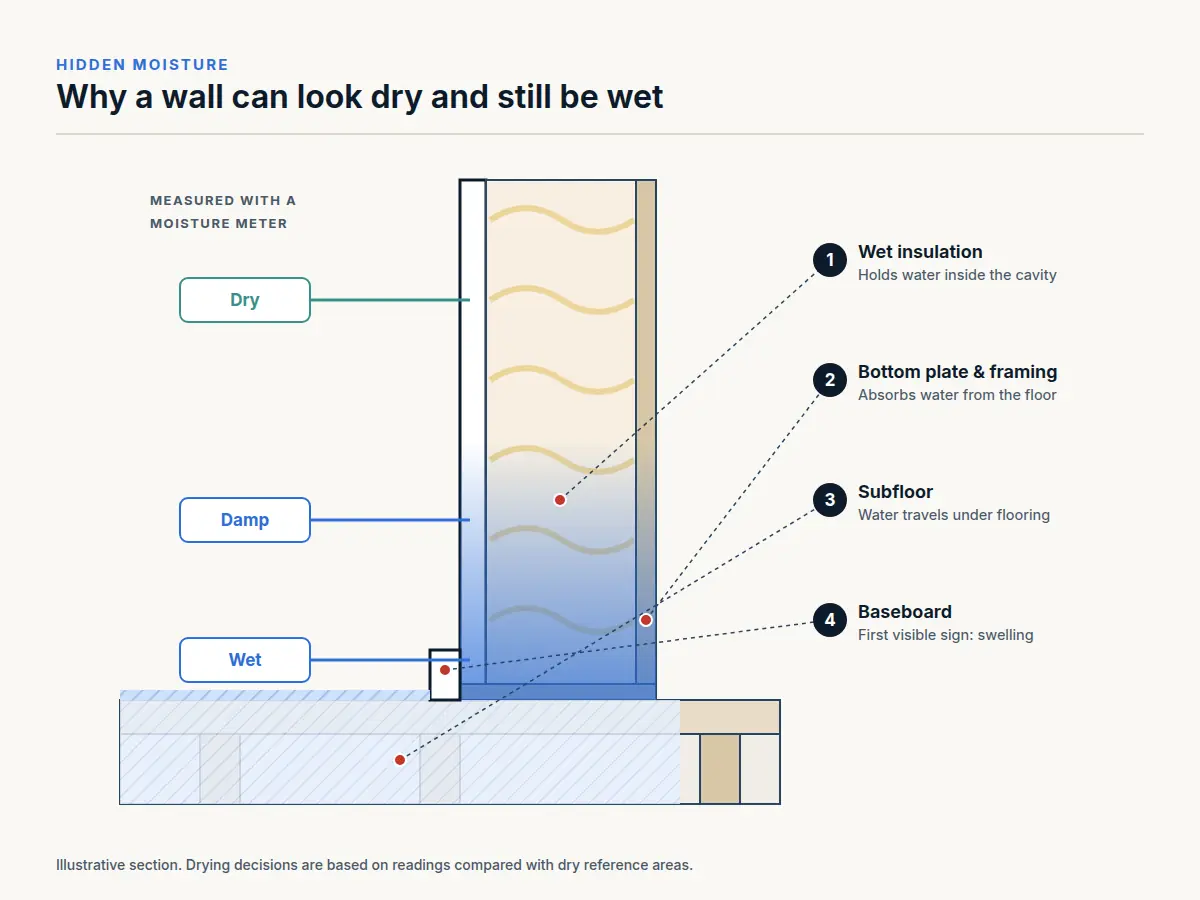
Kitchens and laundry rooms are full of materials that trap water: cabinet bases, toe kicks, laminate and vinyl plank flooring, and subfloor underneath. That is why appliance leaks often look small but need careful moisture checking.
01
Washing machine leaks
Laundry rooms in basements or on upper floors can send water into finished rooms and ceilings below. Braided stainless supply hoses and a leak sensor or automatic shut-off valve can reduce future risk.
02
Dishwasher leaks
Dishwasher leaks often travel under the cabinets and into adjacent flooring. Toe-kick panels may need to be removed to dry the cavity beneath the cabinets, and some flooring types trap water that requires specialized drying.
03
Restoration approach
- Shut off the appliance water supply and unplug the appliance if safe
- Moisture readings under flooring and inside cabinet bases
- Targeted drying of cabinets and subfloor to limit tear-out
- Flooring removal only when water is trapped or materials are damaged
Not sure how serious it is?
A professional assessment shows exactly where the water went and what it will take to dry and restore your property.
Frequently asked questions
Will my kitchen cabinets need to be replaced?
Not necessarily. Many cabinet bases can be dried in place by removing toe kicks and drying the cavity. Particleboard that has swollen or delaminated usually cannot be restored.