Structural drying is the controlled removal of moisture from building materials — drywall, subfloors, framing and ceilings — using air movers, dehumidifiers and regular moisture readings. It goes beyond removing visible water so materials are actually dry before repairs, which helps prevent warping, odors and mold.
- Surfaces can feel dry while framing is still wet
- Dehumidifiers matter as much as air movers
- Readings are compared with dry reference areas
- Dry wet materials within 24–48 hours (U.S. EPA)
Last reviewed · Reviewed against the sources listed on this page
Building materials absorb water. Drywall wicks it upward, wood subfloors and framing soak it in, and insulation can hold it inside wall cavities. When that moisture is left behind, it can lead to swelling, warping, odors and conditions where mold can grow.
Structural drying is the controlled process of removing that moisture. It combines air movement, dehumidification and, where needed, specialty drying methods — and it is guided by measurements rather than guesswork.
02
How the drying system works
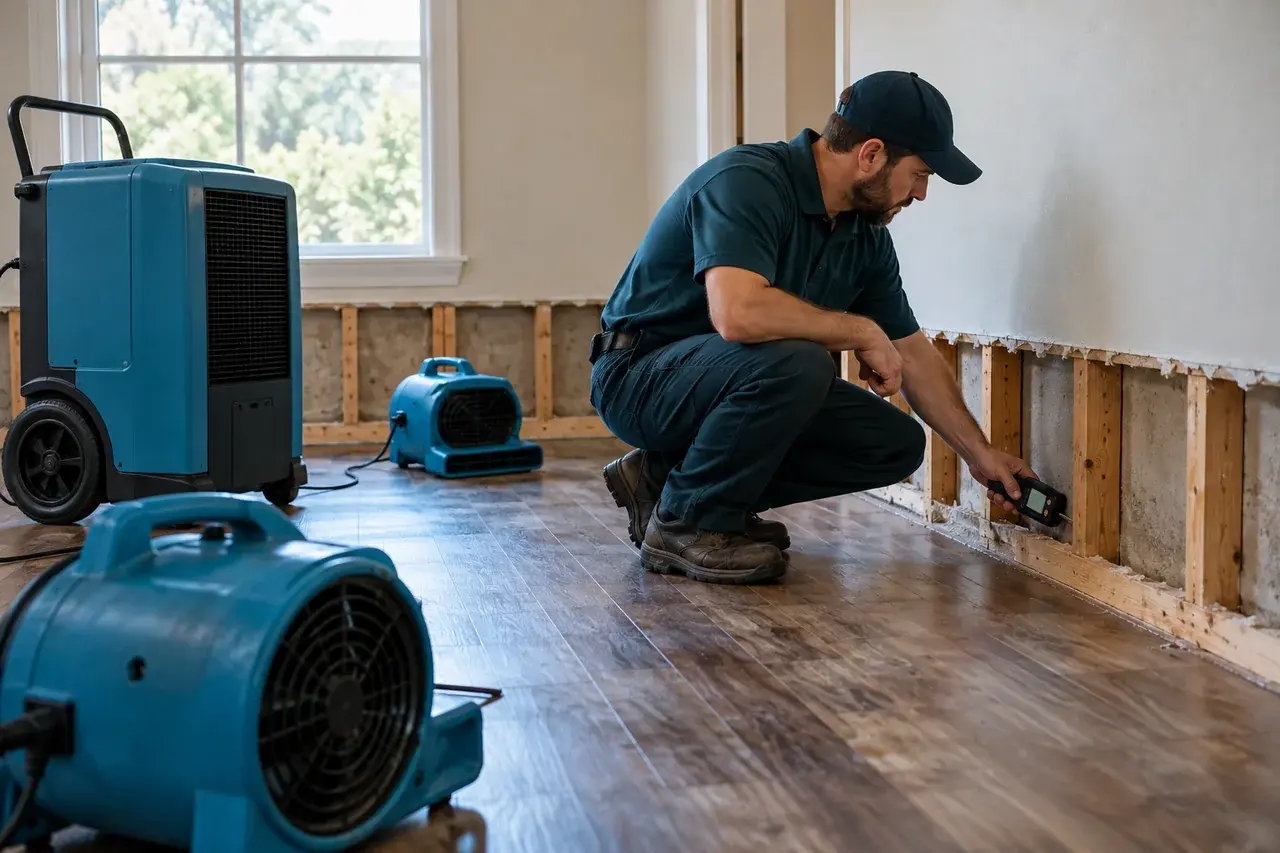
Air movers increase evaporation from wet surfaces. Dehumidifiers pull that evaporated moisture out of the air so it does not simply re-absorb into other materials. Containment can be set up to focus drying on the affected area. In some cases, wall cavities or under-cabinet spaces are dried with targeted systems to reduce the need for demolition.
Equipment is adjusted as conditions change. Too little equipment slows drying; too much in the wrong place wastes energy without improving results.
03
Monitoring and documentation
Readings are taken at the start and on follow-up visits, compared to dry reference readings from unaffected parts of the property, and recorded. This record shows when materials reached their drying goal and is also useful for insurance documentation.
04
How long structural drying takes
There is no single timeline. Drying depends on how much water was involved, how long it sat, the materials affected, indoor conditions and whether materials had to be removed. Many residential jobs are measured in days rather than weeks, but the readings — not the calendar — decide when drying is complete.
05
What Equipment Is Used for Structural Drying?
| Equipment | What it does |
|---|---|
| Air movers | Blow air across wet surfaces to speed evaporation |
| Dehumidifiers | Pull evaporated moisture out of the air so it does not re-absorb |
| Moisture meters | Measure moisture inside drywall, wood and subfloor |
| Thermal imaging | Shows temperature differences that suggest hidden moisture |
| Hygrometer | Tracks humidity and temperature in the drying area |
| Containment | Focuses drying on the affected area |
| Cavity drying systems | Push dry air into walls or under cabinets to limit demolition |
06
Why Do Basements Take Longer to Dry?
Basements are below grade, cooler and surrounded by concrete and soil that hold moisture. Northern Virginia summers are humid, so a basement left without dehumidification can stay damp for a long time. Basement drying in Fairfax usually relies heavily on dehumidifiers and is monitored closely.
07
How Do You Know When Drying Is Complete?
Drying is complete when moisture readings in the affected materials reach their drying goals — typically matching readings from similar, unaffected materials in the same building. The readings are recorded at each visit, which documents the result for you and your insurer.
Sources & further reading
Not sure how serious it is?
A professional assessment shows exactly where the water went and what it will take to dry and restore your property.
Frequently asked questions
How long do the drying fans and dehumidifiers need to run?
For most residential water losses, drying equipment runs for roughly three to five days, and longer when water has soaked into hardwood, subfloors or wall cavities. The equipment should stay until moisture readings show the materials are dry — not until a set number of days has passed — so it is reasonable to ask to see the readings.
Can I dry water damage with household fans?
Household fans move some air but do not remove moisture from it, and they cannot tell you whether framing or subfloor is dry. For anything beyond a small surface spill, dehumidification and moisture readings are needed.
Can I turn the equipment off at night?
We recommend leaving the drying equipment running unless a technician tells you otherwise. Turning it off allows humidity to rise again and can extend drying time.
Why is the equipment so loud?
Air movers and dehumidifiers move a lot of air. We place equipment to balance effective drying with the realities of living or working in the space and can discuss adjustments with you.
Will you have to cut my drywall?
Not always. When drywall is affected by clean water and addressed early, it can often be dried in place. Removal is more likely with contaminated water, saturated insulation, swollen or damaged material, or when moisture is trapped behind non-breathable finishes.