Water Damage Restoration Fairfax
Fast help for leaks, flooding, burst pipes & emergency water removal in Fairfax, VA
Burst pipe, flooded basement, leaking water heater or sewage backup? We handle water damage restoration in Fairfax, VA from start to finish — water extraction, mitigation, structural drying, cleanup and repairs for homes and businesses.
- Water extraction
- Structural drying
- Moisture mapping
- Insurance documentation
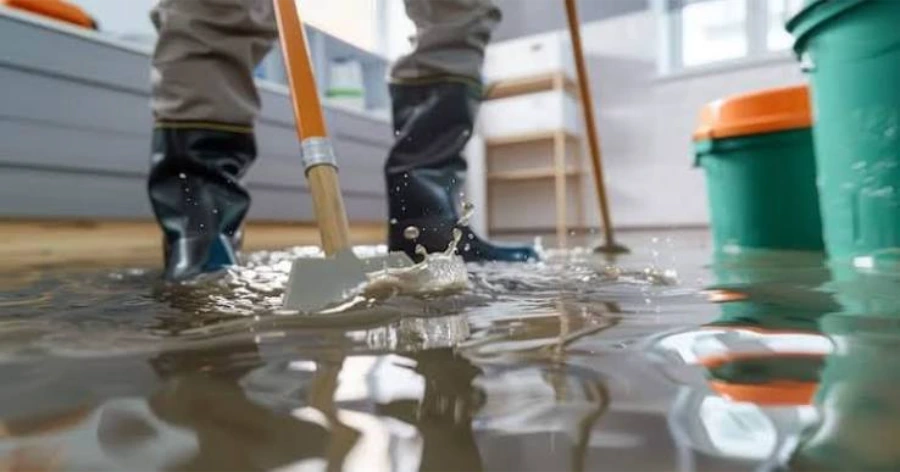
Water damage emergency?
Call now to discuss your water damage and next steps.
- Emergency Water Damage Help
- Professional Water Extraction
- Structural Drying
- Moisture Assessment
- Residential & Commercial
What Is Water Damage Restoration?
Water damage restoration is the process of removing unwanted water, drying affected materials, controlling moisture, cleaning and sanitizing where needed, and repairing the property after a leak, flood or backup. Water Damage Restoration Fairfax provides water damage restoration in Fairfax, VA — including water extraction, cleanup, mitigation and structural drying — for homes and businesses across the City of Fairfax and Fairfax County.
- Extraction removes standing water; drying removes the moisture left in materials
- Dry wet materials within 24–48 hours to help prevent mold (U.S. EPA)
- Clean, gray and black water are handled differently
- Repairs start only after drying is verified with readings
Last reviewed · Reviewed against the sources listed on this page
What does water damage restoration include?
- 1.Inspection, safety check and water category assessment
- 2.Water extraction and standing water removal
- 3.Water mitigation to stop damage from spreading
- 4.Structural drying with dehumidifiers and air movers
- 5.Moisture monitoring until drying goals are met
- 6.Cleaning, sanitizing and odor control where needed
- 7.Repairs or reconstruction of removed materials
What actually happens when water gets into your Fairfax home
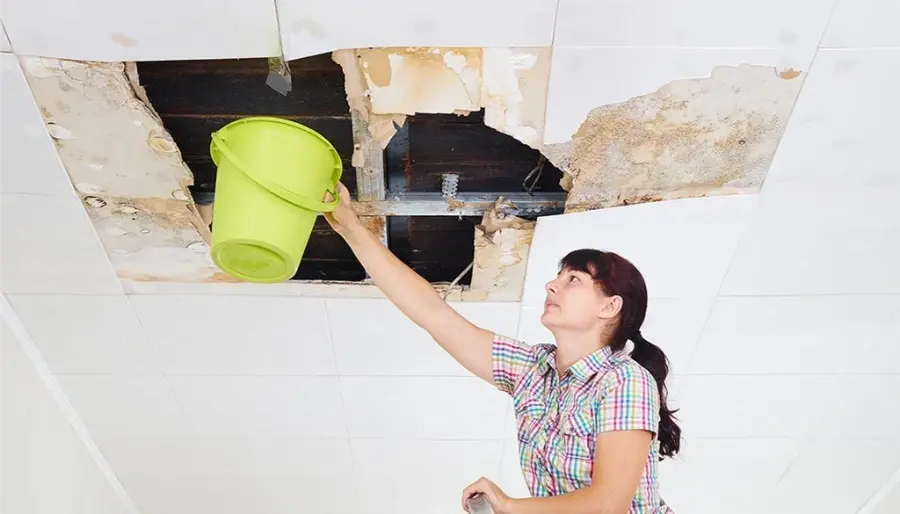
It usually starts with something small. A drip under the kitchen sink. A soft spot in the hallway carpet. A brown ring on the ceiling that you’re sure wasn’t there last week. How serious it is depends less on how much water you can see and more on where it has already gone. Water moves sideways under flooring, climbs up drywall and settles between floor joists — which is why the stain on a ceiling is almost always smaller than the wet area above it.
Can’t you just mop it up and run a fan? For a spill on tile that you caught within minutes, honestly, yes. But once water has soaked into carpet pad, run under baseboards or reached a finished basement, a box fan only dries the surface. The drywall, insulation and subfloor underneath can stay wet for days, and that’s where swelling, odors and mold begin. The U.S. EPA’s guidance is to get water-damaged materials dry within 24 to 48 hours.
What a restoration team adds is measurement. Moisture meters and thermal imaging show exactly where the water travelled, and that tells us what can be dried in place and what genuinely has to come out. Then we extract the water, put drying equipment where the readings say it’s needed, and come back to re-check until every reading matches the dry parts of your home. Nothing gets closed up or repainted until the numbers say it’s dry.
Not every leak is an emergency. A slow drip you’ve already stopped can wait for a scheduled visit. But if water is still coming in, if it’s near outlets or your electrical panel, if it came up through a floor drain, or if it’s spread across a finished basement, treat it as urgent and call (571) 749-1896.
How Quickly Should Water Damage Be Addressed?
First minutes to hours
Water spreads across floors, under baseboards and into carpet pad; drywall begins wicking moisture upward.
Hours to a day or two
Wood and particleboard start to swell, finishes stain and odors develop. Hidden pockets of moisture form.
Beyond a few days
Materials that stay wet are more likely to warp, delaminate or support mold growth — and more often need removal.
Water Damage Restoration Services in Fairfax
- 01
Water Extraction
Removal of standing and absorbed water from floors, carpet and basements so drying can begin.
Learn more about Water Extraction - 02
Water Mitigation
The urgent first phase: stop the water, remove it and start drying before damage spreads.
Learn more about Water Mitigation - 03
Structural Drying
Measured, monitored drying of walls, floors, subfloors and framing — not just the surfaces you can see.
Learn more about Structural Drying - 04
Flood Damage Restoration
Cleanup, sanitizing and drying after floodwater, surface runoff or groundwater enters a home or building.
Learn more about Flood Damage Restoration - 05
Sewage Cleanup
Safe removal and sanitizing after sewer backups, toilet overflows with waste and drain backups.
Learn more about Sewage Cleanup - 06
Mold Remediation
Moisture correction, containment and removal of mold-affected materials when water damage was not dried in time.
Learn more about Mold Remediation
More water damage services
Water still coming in?
Shut off the source if it is safe, then call. We will walk you through what to do next.
Which Water Damage Service Do You Need?
| What you are seeing | Service that usually helps | Why |
|---|---|---|
| Standing water on floors or in a basement | Water extraction & removal | Removes the bulk of the water so drying can start |
| Wet drywall, damp subfloor, musty smell | Structural drying | Dries hidden moisture in walls, floors and framing |
| Water came in from outside after heavy rain | Flood damage restoration | Floodwater is treated as contaminated |
| Drain or toilet backup with waste | Sewage cleanup | Requires containment, removal and sanitizing |
| Visible spotting after an old leak | Mold remediation | Fixes moisture, then removes affected materials |
| Water has to stop spreading now | Water mitigation | Extraction, removal of wet materials and drying |
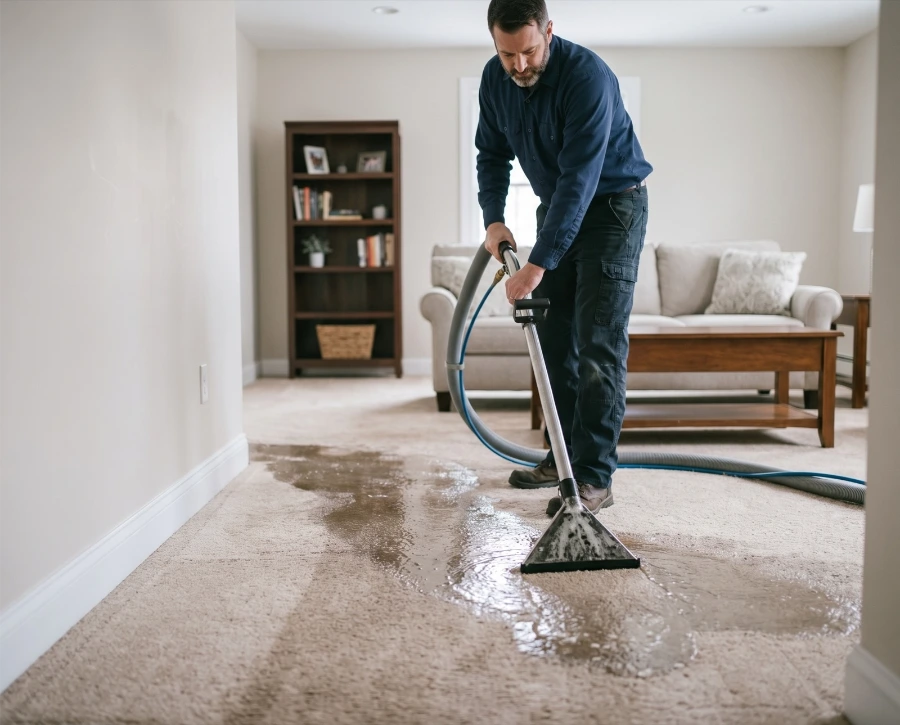
What Happens During Water Extraction?
During water extraction, technicians remove standing and absorbed water from floors, carpet and pad using pumps and extraction equipment, then measure moisture to plan drying. Every gallon removed during extraction is a gallon that does not have to be evaporated later — it is where a professional response makes the biggest early difference.
- Standing water removal from floors, carpet and basements
- Assessment of affected materials — what can be dried and what can't
- Moisture measurements beyond the visible wet line
- A written drying plan before equipment is placed
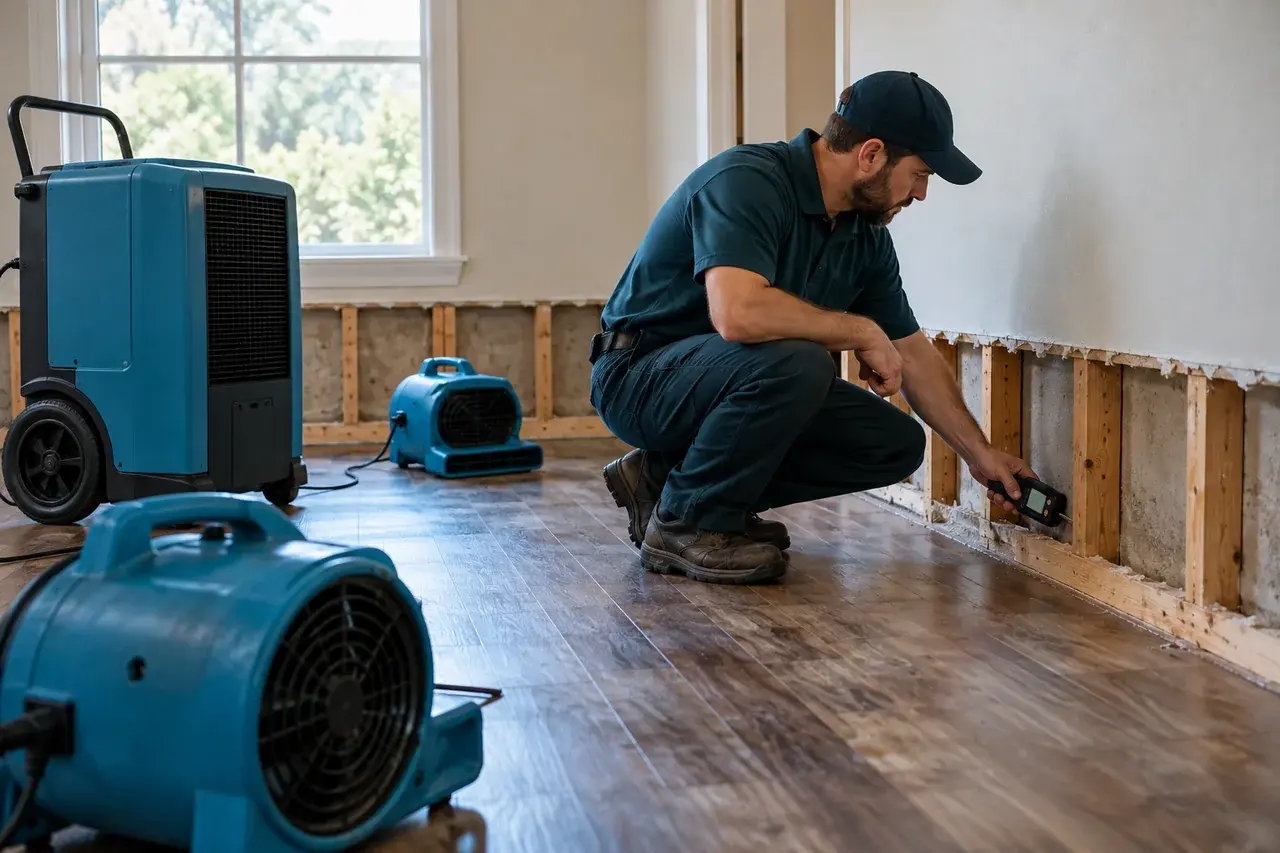
What Is Structural Drying?
Structural drying is the controlled removal of moisture from walls, floors, subfloors, ceilings and framing using air movers, dehumidifiers and moisture monitoring. Drywall wicks water upward, subfloors and framing absorb it, and ceilings hold it out of sight — left behind, that moisture causes swelling, odors and conditions for mold.
- Walls
- Floors & subfloors
- Ceilings
- Framing
- Hidden moisture
- Humidity control
Water Extraction vs Water Removal vs Water Mitigation
| Term | What it means | Typical work | When it happens |
|---|---|---|---|
| Water extraction | Physically pulling water out of floors, carpet and pad | Pumps, extraction wands, weighted extraction | First hours of the job |
| Water removal | Removing standing water from a space (often used interchangeably with extraction) | Pumping basements and crawl spaces | First hours of the job |
| Water mitigation | Steps that stop the damage from getting worse | Extraction, removing wet materials, drying, dehumidification | Immediately after extraction until dry |
| Restoration | Returning the property to pre-loss condition | Drywall, flooring, trim and finish repairs | After drying is verified |
What Is the Difference Between Clean, Gray and Black Water?
Clean water comes from a sanitary source, gray water contains some contamination, and black water is grossly contaminated — the category decides what can be dried in place and what must be removed. Water can also get worse the longer it sits.
| Category | Common sources | What it means for restoration |
|---|---|---|
| Clean water (Category 1) | Burst supply line, faucet, ice-maker line | Often dried in place if addressed quickly |
| Gray water (Category 2) | Washing machine or dishwasher discharge | More cleaning; porous materials evaluated carefully |
| Black water (Category 3) | Sewage backup, floodwater from outside, toilet overflow with waste | Containment, removal of porous materials, sanitizing |
When Should You Call a Water Damage Restoration Company?
Call a restoration company when water has soaked carpet or reached walls, collected in a basement, come through a ceiling, involved sewage, sat for more than a day, or when you cannot find or stop the source. A small spill wiped up quickly on a hard floor usually does not need one.
What Causes Water Damage in a Fairfax Home?
- 01
Burst pipes
Frozen or corroded supply lines release pressurized water into walls, ceilings and floors until the water is shut off.
Learn more about Burst pipes - 02
Appliance leaks
Washing machine hoses, dishwashers and ice-maker lines leak under cabinets and flooring, often out of sight.
Learn more about Appliance leaks - 03
Water heater failures
Tanks and valves fail with age, soaking utility rooms and the finished spaces next to them.
Learn more about Water heater failures - 04
Roof leaks
Water runs along decking and insulation before it shows up as a ceiling stain — usually larger than it looks.
Learn more about Roof leaks - 05
Sump pump failures
A power outage or stuck float during a storm can let groundwater rise into the basement.
Learn more about Sump pump failures - 06
Flooded basements
Heavy rain and runoff push water in through walls, window wells and doors.
Learn more about Flooded basements - 07
Sewage backups & toilet overflows
Blocked or overwhelmed lines push contaminated water up through the lowest drains.
Learn more about Sewage backups & toilet overflows - 08
Storm intrusion
Wind-driven rain and fallen limbs open roofs, windows and siding to water.
Learn more about Storm intrusion - 09
Hidden leaks
Slow leaks inside walls, under floors and above ceilings — found with a moisture inspection.
Learn more about Hidden leaks
How Long Does Water Damage Restoration Take?
- STEP 01
Emergency Contact
You call or submit the form. We ask a few quick questions and give you safety steps to take while we are on the way.
- STEP 02
Inspection & Damage Assessment
We confirm the source is stopped, check for safety hazards, classify the water and map moisture.
- STEP 03
Water Extraction
Standing and absorbed water is removed so drying can begin.
- STEP 04
Drying & Moisture Monitoring
Air movers and dehumidifiers are placed and adjusted based on readings.
- STEP 05
Cleaning & Sanitizing
Affected surfaces are cleaned and, where appropriate, treated.
- STEP 06
Repairs / Reconstruction
Removed materials are replaced and finishes restored — only after drying is verified.
- STEP 07
Final Review
We walk through the completed work with you and hand over documentation.
What Should You Do Immediately After Water Damage?
Safe actions
- Stop the water source if it is safe to do so
- Shut off electricity only when safe and appropriate
- Move valuables away from water
- Document visible damage with photos and video
- Contact your insurer when appropriate
- Call a professional restoration company
What NOT to do
- Do not enter unsafe electrical areas
- Do not disturb contaminated sewage water
- Do not ignore hidden moisture
- Do not delay professional assessment when significant water is present
Insurance and Cost: Straight Answers
Will insurance pay for it? The honest answer is that it depends on your policy and on what caused the water. A sudden burst pipe is usually treated very differently from a slow leak that went on for months. And flooding from outside — rising water after a storm — is usually not covered by a standard homeowners policy at all; FEMA points out that it typically needs separate flood insurance.
What we can do is document everything properly: photos, moisture readings, drying logs and a written scope. That’s what adjusters ask for, and it’s what keeps a claim moving. We never promise coverage — your insurer makes that call.
As for cost, we won’t quote a number over the phone, because nobody honestly can. The price of water damage restoration in Fairfax depends on the type of water, how far it spread, which materials got wet, how long drying takes and whether repairs are needed. The water damage restoration cost guide walks through every factor.
What Happens When You Call
You’ll talk to a person, not a phone tree, and they’ll ask a few quick questions: where the water is coming from, whether it’s still running, which rooms are affected and whether anything electrical is wet.
While you wait, shut off the water if you can do it safely, keep away from wet outlets and cords, move valuables and electronics to a dry spot, and take photos before anything is moved.
Should you call a plumber or us first? If a pipe is still spraying and you can’t stop it, call a plumber right away. Then call us — the plumber fixes the pipe, and we deal with the water it left behind.
Can Water Damage Cause Mold?
Yes. Materials that stay damp after water damage can support mold growth; the U.S. EPA advises drying water-damaged areas and items within 24–48 hours to help prevent it (EPA). Problems usually start where moisture hides — inside walls, under flooring and above ceilings — so the best prevention is fast, thorough drying confirmed by moisture readings.
When mold is already present, remediation focuses on controlling the moisture source, containing the area, removing affected materials, cleaning and drying.
- 1Moisture control
- 2Drying
- 3Inspection
- 4Remediation where necessary
Water Damage Restoration in Fairfax, VA: What Local Properties Face
Why do so many Fairfax basements take on water? A lot of homes across the City of Fairfax (ZIP codes 22030–22033) and the surrounding county were built decades ago, with finished basements added later. When heavy rain saturates the soil, water finds its way in through window wells, wall cracks and overwhelmed sump pits. Fairfax County’s own advice is simple: keep gutters and outdoor drains clear and extend downspouts at least five feet from the foundation.
Summer and winter cause different problems. Summer brings thunderstorms and sticky humidity that slows drying. Winter brings cold snaps that split pipes in exterior walls, garages and crawl spaces — usually discovered on the first warm day, when the ice thaws. In townhomes and condos, a leak in one unit can quickly become the neighbors’ problem too.
“Fairfax” also covers two jurisdictions: the independent City of Fairfax, centered on Old Town, and the much larger Fairfax County around it, where many neighborhoods share a Fairfax mailing address. We work in both, and permits and inspections for repairs depend on which side of the city line a property sits. Fairfax County also funds a Flood Mitigation Assistance Program that can partially reimburse qualifying flood-protection projects.
Areas we serve around Fairfax
The City of Fairfax, neighborhoods along the Route 50, Route 29, Route 123 and I-66 corridors, and these nearby communities:
- Fairfax Station
- Fair Oaks
- Oakton
- Vienna
- Annandale
- Burke
- Springfield
- Centreville
- Chantilly
- Falls Church
- McLean
- Reston
- Herndon
- Clifton
- Lorton
- Tysons
- Great Falls
- Merrifield & Dunn Loring
- West Springfield
- Kingstowne & Franconia
- Mantua
Fairfax neighborhoods we cover
Inside the City of Fairfax and the Fairfax-addressed parts of the county (ZIP codes 22030, 22031, 22032 and 22033), that includes:
- Old Town Fairfax
- Mosby Woods
- Country Club Hills
- Fairfax Acres
- Cobbdale
- Westmore
- Fairfax Circle
- Fairfax Villa
- Kings Park West
- Penderbrook
- Fair Lakes
- Fairfax Farms
- Fairfax Corner
- George Mason University area
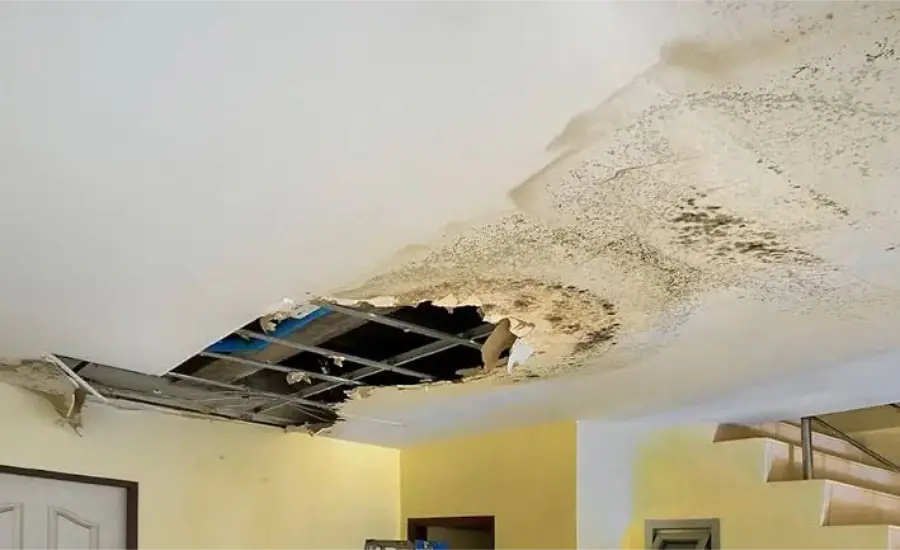
Why Choose Water Damage Restoration Fairfax?
- 01
Fast, honest communication
Real answers — including realistic arrival times.
- 02
Measured, documented drying
Decisions backed by moisture readings, recorded for you.
- 03
Insurance documentation
Photos, logs and scopes that support your claim.
- 04
Residential & commercial
Homes, townhomes, condos, offices and retail.
How do you check a water damage company in Fairfax before you hire it? Start with the license. In Virginia, contractors doing repair work above $1,000 must be licensed by the Board for Contractors, and you can look any company up by name on the Virginia DPOR website. If a company says it is IICRC certified, the IICRC lets you confirm it. Ask for a certificate of insurance and a written, itemized estimate before work starts, and be wary of anyone who asks you to sign over insurance payments on the first visit.
From Water Damage to Finished Repairs
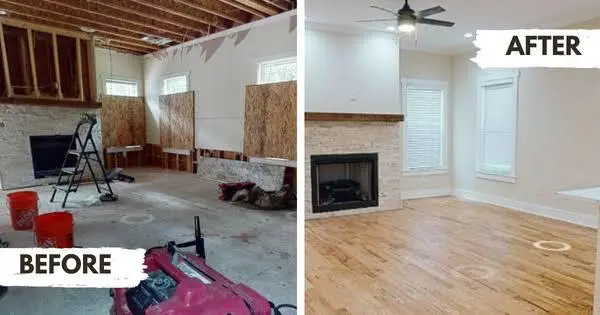
How repairs and rebuilding work Example: a flooded basement, step by step
What Fairfax Customers Say
“We discovered water leaking into our basement and needed help understanding the damage. The team explained the next steps clearly and made the situation easier to manage.”
SSarah M.
Fairfax, VA
“After a pipe burst in our home, we needed quick guidance. The water damage cleanup process was explained in a clear and organized way.”
MMichael R.
Vienna, VA
“Water had affected part of our ceiling and walls. We appreciated having the damage assessment and drying process explained to us.”
JJennifer T.
Oakton, VA
“Our basement had water after heavy rain, and we were worried about moisture behind the walls. Understanding the drying process helped us plan the cleanup.”
DDavid R.
Burke, VA
“We noticed water damage around our bathroom and wanted to address it before it spread. The information we received helped us understand our options.”
LLisa K.
Annandale, VA
“A leaking appliance left water across part of our floor. We wanted to understand what needed to be dried and checked before making repairs.”
RRobert S.
Chantilly, VA
“After a storm, we found water inside our home. We needed a clear plan for cleanup and preventing further damage.”
AAmanda W.
Centreville, VA
“We were concerned about damp drywall and possible moisture in hidden areas. The assessment process helped us understand what needed attention.”
JJames P.
Springfield, VA
“Water damage can be stressful, especially when you don’t know where to begin. Having the cleanup steps explained made things easier to understand.”
MMichelle D.
Falls Church, VA
“We wanted to deal with water damage properly rather than rush into repairs. Learning about moisture checks and structural drying helped us plan our next steps.”
DDaniel C.
Herndon, VA
Water Damage Restoration Fairfax FAQs
How quickly should water damage be addressed?
As soon as possible. Water keeps spreading into drywall, flooring and framing, and materials that stay wet for more than a day or two become more likely to swell, warp or support mold growth. Prompt extraction and drying usually means less removal and a shorter, less costly restoration.
How much does water damage restoration cost in Fairfax?
There is no honest flat price. Cost depends on the water source and contamination level, how much area and how many materials are affected, whether materials must be removed, how long drying takes and whether repairs are needed. After an inspection, you receive a written estimate. Our water damage cost guide explains each factor in detail.
How long does water damage restoration take?
Drying alone often takes several days for a typical residential loss, but it varies with the amount of water, the materials affected and conditions in the building. Repairs add time after drying is verified. We give you an expected timeline after the inspection and update it as readings come in.
How long do the drying fans and dehumidifiers need to run?
For most residential water losses, drying equipment runs for roughly three to five days, and longer when water has soaked into hardwood, subfloors or wall cavities. The equipment should stay until moisture readings show the materials are dry — not until a set number of days has passed — so it is reasonable to ask to see the readings.
Can hidden water damage cause mold?
Yes. Moisture trapped inside walls, under flooring or above ceilings can create conditions where mold grows, even if the surface looks fine. Moisture readings and proper drying help prevent this.
Can you help with insurance documentation?
Yes. We can document the damage with photos, moisture readings, drying records and a written scope, and communicate with your adjuster where applicable. Your insurer determines coverage — we do not guarantee it.
Do I have to use the restoration company my insurance company recommends?
Generally, no. Insurers can suggest preferred vendors, but you can usually choose who works on your home. If you pick a company outside their network, check your policy and ask your adjuster what pricing they consider reasonable before work starts.
Can you restore a flooded basement?
Yes. Basement restoration typically includes water extraction, evaluation of carpet, pad, drywall and insulation, removal of materials that cannot be dried or were contaminated, and dehumidification-focused drying with monitoring.
Can water damage affect drywall?
Yes. Drywall wicks water upward and can swell, soften, stain or lose strength. Drywall affected by clean water and addressed quickly can often be dried in place; drywall affected by contaminated water or left wet too long is usually removed.
What is the difference between water removal and water mitigation?
Water removal (extraction) gets the water out. Mitigation is broader: it includes water removal plus removing unsalvageable materials, drying and monitoring moisture until the structure is dry.
Does insurance cover flood damage?
Most homeowners insurance policies do not cover flooding from outside the home. Flood coverage is usually a separate policy, such as one through FEMA's National Flood Insurance Program, which Fairfax County participates in. Check your own policy or ask your agent.
Should I call a restoration company or a plumber?
Often both. A plumber repairs the pipe, fixture or drain that caused the water. A restoration company removes the water, dries the structure, cleans affected areas and documents the damage.
Tell Us What Happened
- (571) 749-1896
- Contact the team to confirm current availability
- Fairfax, VA and nearby Fairfax County
Sources & further reading
- A Brief Guide to Mold, Moisture and Your Home — U.S. EPA
- Flood Insurance — FEMA
- Be Flood Ready and Resilient — Fairfax County Stormwater Management
- Solving Drainage and Erosion Problems: A Guide for Homeowners — Fairfax County / Northern Virginia Soil and Water Conservation District
Need water damage restoration in Fairfax, VA? Get help now.
Tell us what happened. We will walk you through immediate safety steps and get a technician scheduled to assess the damage.