For a leaking water heater, turn off the cold-water supply, shut off the power or set the gas control to off or pilot, avoid the hot water, and call a plumber. Then have nearby floors, baseboards and adjoining rooms checked for moisture — slow tank leaks often spread under walls unnoticed.
- Shut off water and power to the heater
- If you smell gas, leave and call the utility
- Slow leaks can do as much damage as sudden ones
- A drain pan and leak sensor are cheap protection
Last reviewed · Reviewed against the sources listed on this page
Tank water heaters can leak from the tank itself, the drain valve, the temperature-and-pressure relief valve or the supply connections. A tank failure can release its full volume and keep running while the supply line is open.
Because the water is hot, it can also raise humidity in the space quickly, and because water heaters are often tucked into closets, the leak may run under walls into adjoining rooms before anyone notices.
01
Where to check for damage
- Flooring in the utility room and adjoining rooms
- The bottom of surrounding drywall and baseboards
- Carpet and pad in finished basement areas
- Stored items and boxes near the heater
- Ceilings below if the heater is on an upper floor or in an attic
02
Slow leaks vs. sudden failures
A sudden tank failure is easy to spot. A slow leak can go unnoticed for weeks, leaving swollen baseboards, damp subfloor and musty odor. Slow leaks may also be treated differently by insurers, so documenting the timeline and condition is important.
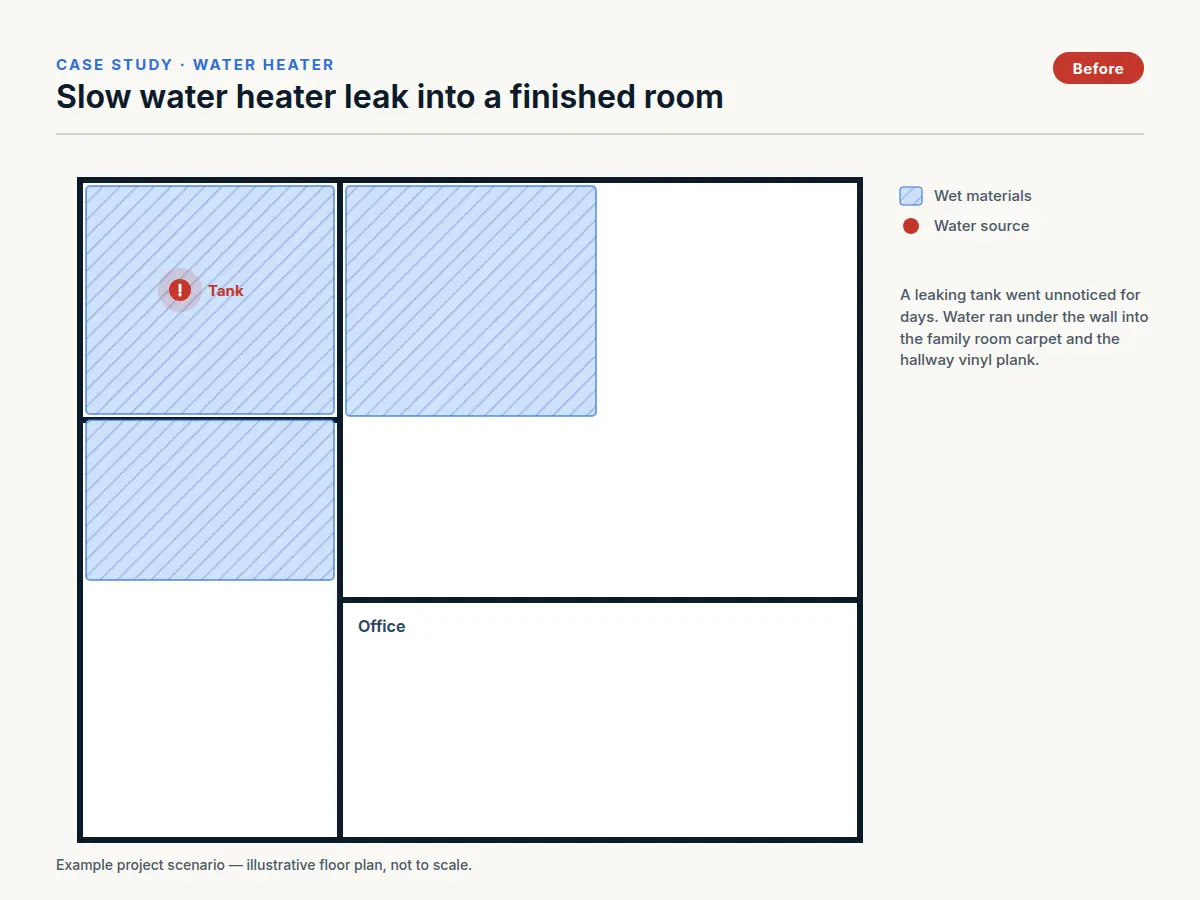
Example scenario: slow water heater leak into a finished room
An illustrative example of a typical Fairfax-area water loss — not a specific customer project.
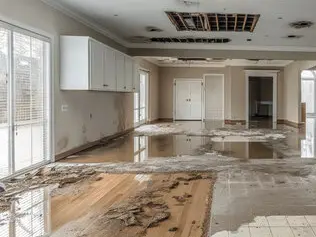
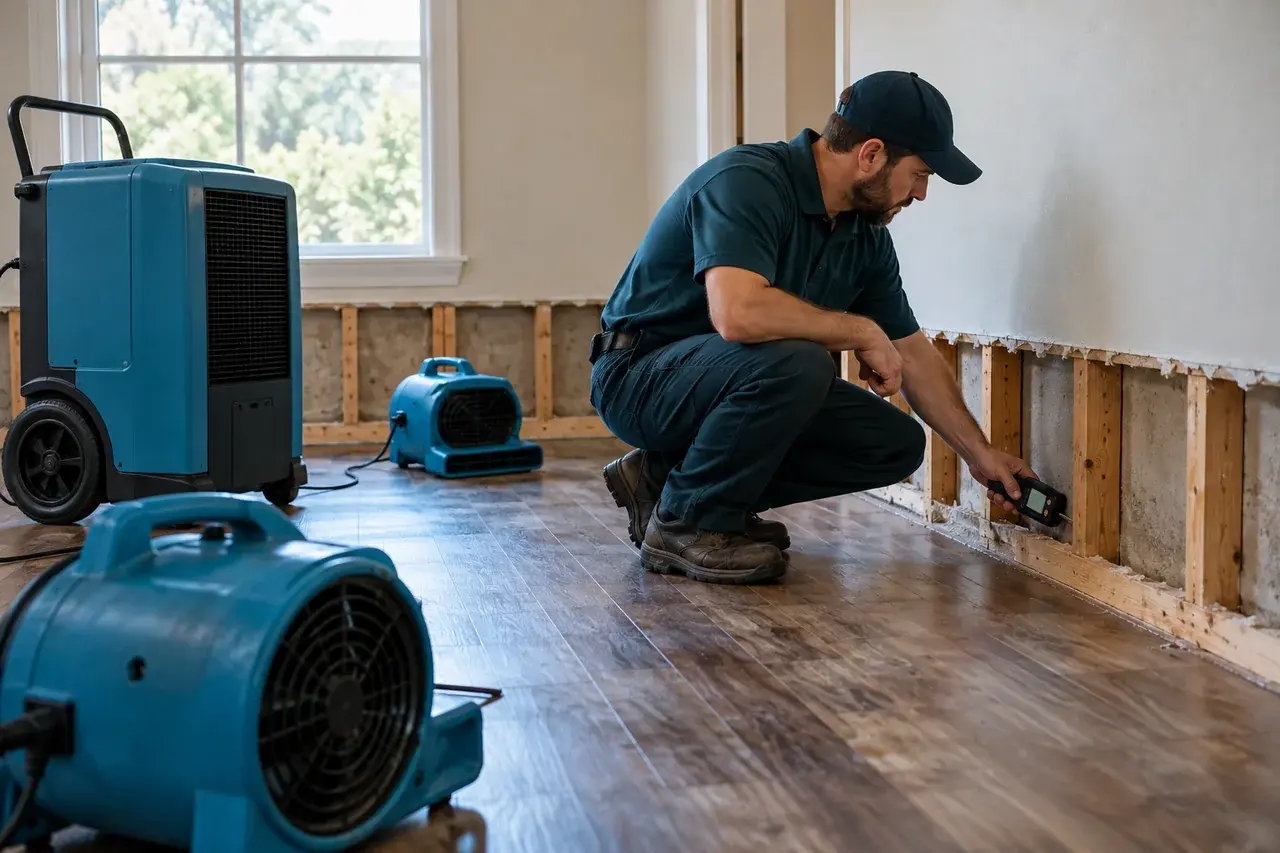
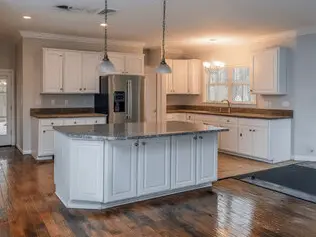
What happened
A water heater in a utility closet developed a slow leak. Over several days, water travelled under the shared wall into the family room carpet and under vinyl plank flooring in the hallway — with swelling baseboards and a musty odor as the first signs.
How it is typically restored
- Water supply to the heater shut off; plumber replaced the unit
- Moisture mapping to find how far water had travelled
- Vinyl plank lifted where water was trapped beneath it
- Base of the shared wall opened to dry the cavity
- Carpet pad removed; carpet dried and cleaned
- Area contained, drying equipment placed and monitored
Outcome
Once readings matched dry reference areas, the wall, flooring and carpet were restored. The new heater was installed with a drain pan.
Not sure how serious it is?
A professional assessment shows exactly where the water went and what it will take to dry and restore your property.
Frequently asked questions
How do I know if my water heater is leaking?
Look for water on the floor around the base, rust or corrosion, dripping from the relief valve, damp drywall nearby or unusually low hot water. Any pooling near the heater should be checked by a plumber.